
For UK automakers, market access to India will be limited by quantity caps and phased tariff cuts, especially on petrol, diesel and electric vehicles.

Analysts believe Tesla will first focus on building the Model Y brand before expanding -- both in terms of volume and models.

'...it should not delude itself into thinking that India's security or its great-power ambitions will be advanced by those partnerships.'
'Instead, what India should focus on is on riding out the next three-and-a-half years of Trump's presidency with minimal damage to itself.'

Tata Group remained India's largest business conglomerate in market capitalisation in calendar year 2023 while the Mukesh Ambani camp raced ahead of the Adani businesses to become the second-largest. The Tata companies ended 2023 with a combined group market capitalisation of Rs 28.68 trillion, up 35 per cent from the Rs 21.2 trillion at the end of December 2022. Ambani's group mcap is Rs 19.42 trillion at the end of CY23, up 10.7 per cent from the Rs 17.6 trillion a year ago.

The recent equity market weakness has sobered up investor mood, but the coming festive season is keeping analysts upbeat on stocks related to the consumption basket. Among the lot, fast-moving consumer goods (FMCG), retail, and consumer electronics segments are expected to do well over the next few months, and investors should thus selectively take bets in these pockets, analysts suggest. "We expect good volume growth for the FMCG sector during the festive season with some improvement in rural demand.

The information technology (IT) services industry may be headed for another year of sluggish growth. Based on the results of the top five IT services companies for the first quarter of 2025-26 (Q1FY26), analysts say the possibility of hitting high single-digit revenue growth in FY26 looks unlikely.

The letter shared with the media on Saturday comes amid Maharashtra losing several big-ticket projects to neighbouring Gujarat.

Tata Steel and Tata Motors dropped over 10 per cent each. Larsen & Toubro, HCL Technologies, Adani Ports, Tech Mahindra, Infosys, Tata Consultancy Services, Reliance Industries and Mahindra & Mahindra were the other big laggards.

'Opt for a minimum cover of Rs 10 lakh to Rs 15 lakh, especially in urban and metro areas.'

The domestic stock market this week would monitor the geopolitical developments after India and Pakistan reached an understanding to stop military actions, analysts said. Moreover, macroeconomic data announcements, Q4 earnings, trading activity of foreign investors and global market trends are also likely to influence sentiments, traders said.

Flipkart Group Chief Executive Kalyan Krishnamurthy on Monday said the firm was advancing preparations for a potential initial public offering (IPO) in India, which included shifting its holding company to India from Singapore. Speaking at an internal town hall, Krishnamurthy said the company's leadership structure is strengthening and that the steps toward relocating Flipkart's legal base to India are progressing as planned, according to people familiar with the matter.

Siam argues that a 2040 ban could destabilise ongoing and future investments and threaten millions of jobs in the automotive value chain.
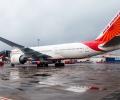
The Tata Group-owned airline, grappling with disruptions following the fatal plane crash on June 12 in Ahmedabad, said the objective of reducing flights on 18 international routes is to restore schedule stability and minimise last-minute inconvenience to passengers.

Maruti, IndusInd Bank, Bajaj Finserv, Eternal, Mahindra & Mahindra, Tata Steel, Kotak Mahindra Bank, Titan, HDFC Bank, and NTPC were among the other major gainers. Bharti Airtel and Sun Pharma were the laggards.

The Punch.ev achieved the highest score point ever recorded by any vehicle to date, scoring 31.46 out of 32 for adult occupant protection and 45 out of 49 for child occupant protection.

HCL Tech, Adani Ports, Eternal, Maruti, Reliance Industries and Asian Paints were among the gainers. HDFC Bank, ICICI Bank, Bharti Airtel and Infosys added to the rally. IndusInd Bank emerged as the only laggard.

The FMCG industry hopes for a revival in consumption growth in 2025 with some 'green shoots' already visible, after having a challenging year amid escalating input costs and a double-digit rise in food inflation, which ultimately slowed down the pace of the urban market growth in the second half of 2024. Soaring prices of commodities such as palm oil, coffee, cocoa and wheat forced FMCG players to go for a hike of 3 to 5 per cent or resort to shrinkflation by reducing pack sizes and grammage to retain attractive price points, fearing a volume loss.

India's fast-moving consumer goods (FMCG) sector grew 5.7 per cent by value and 4.1 per cent by volume in the July-September quarter driven by rural demand, consumer intelligence firm NielsenIQ said in its quarterly update on Thursday. Price-led growth stood at 1.5 per cent. According to NielsenIQ data, rural volume growth outpaced urban markets for the third straight quarter despite consumption softening in both regions.

'A cutback in hiring and compensation growth by IT companies will have a significant impact on consumer demand, especially in the urban sector of the economy.'

From the Sensex pack, Infosys, Tech Mahindra, Nestle India, Tata Consultancy Services, HCL Technologies, Asian Paints, Axis Bank, Zomato, Hindustan Unilever, and Bharti Airtel were among the laggards. On the other hand, IndusInd Bank, Tata Motors, Kotak Mahindra Bank, Bajaj Finance, HDFC Bank, ITC, Sun Pharma, Bajaj Finserv and UltraTech Cement were the gainers.
.jpg)
Tata Power sets up camps to explain the benefits of switchover for low-end consumers from their current supplier.

Falling for the fifth day in a row on Monday, equity benchmark BSE Sensex tumbled over 1 per cent to drop below the crucial 75,000 level, tracking a US market trend and unabated foreign fund outflows amid concerns over US tariffs. The 30-share BSE benchmark tanked 856.65 points or 1.14 per cent to settle at 74,454.41. During the day, it plummeted 923.62 points or 1.22 per cent to 74,387.44.

They were asked to wait for 72 hours, but the deadline passed on Sunday and the wait seems endless.

Thanks to a big payout by the group's cash cow, Tata Consultancy Services (TCS), Tata Sons is set to earn a record-high equity dividend worth nearly Rs 33,350 crore from the group's listed companies for FY23, up 130 per cent from Rs 14,529 crore in FY22. Nearly 90 per cent of this, or around Rs 30,500 crore, is estimated to accrue to Tata Sons while the rest will show up in its profit & loss account for FY24. This is because nearly 80 per cent of the dividend payout by TCS for FY23 was done before the end of the financial year through three quarterly interim instalments and a special one in January this year.

Global tech major Adobe Systems' chief executive Shantanu Narayen on Thursday said creativity, and not software code, will be the main driver of India's economy in the future.

Tata Realty and Infrastructure, a subsidiary of Tata Sons, is looking to expand its business with over 50 projects across major cities in India, Sri Lanka, and the Maldives. The combined projects boast a development potential exceeding 51 million sq ft, according to a top executive. The Mumbai-based real estate major has completed the first phase of project developments in Male (the Maldives), and is gearing up for the second phase. It has also expanded its footprint in Sri Lanka and plans to add about 2 million sq ft. in Colombo.

Led by Tata Motors and Tata Consultancy Services (TCS), the combined revenue of the Tata group's listed firms crossed the Rs 10-trillion mark for the first time, in 2022-23. The group's 14 key listed companies in which Tata Sons holds a direct equity stake reported a combined revenue of Rs 10.07 trillion in FY23, up 15.3 per cent from Rs 8.73 trillion in FY22. The combined net profit of these companies was, however, down 10.6 per cent year-on-year (YoY) at Rs 66,670 crore in FY23, from a record high of Rs 74,540 crore in the previous financial year, when the profit had jumped 156 per cent YoY, aided by Tata Steel's strong showing.

Framing the next chapter in Swiggy's journey as a responsible corporate citizen, co-founder and chief executive officer (CEO) Sriharsha Majety unveiled the company's eagerly awaited public listing. Majety, who has largely shunned the spotlight, shared reflections on his entrepreneurial path and the strategic pivots he and his co-founders navigated in building Swiggy. "We started with code aggregation, then pivoted to logistics, and that became Swiggy.

Leading FMCG companies reported a decline in margins in the September quarter on account of higher input costs and food inflation, which ultimately slowed down the pace of urban consumption. Rising prices of commodity inputs such as palm oil, coffee and cocoa were also accentuated and some FMCG firms have hinted at a price hike. HUL, Godrej Consumer Products Ltd (GCPL), Marico, ITC, and Tata Consumer Products Ltd (TCPL) have expressed concerns over squeezing urban consumption, which according to industry experts forms 65-68 per cent of FMCG total sales.

'This was earlier driven by industries and the commercial sector.'

Dalal Street investors were a poorer lot on Monday as their wealth eroded sharply by Rs 14 lakh crore following a sharp decline in benchmark indices amid a global market meltdown due to recession fears. The 30-share BSE Sensex tumbled 2,226.79 points or 2.95 per cent to settle at 73,137.90. Intra-day, the benchmark slumped 3,939.68 points or 5.22 per cent to 71,425.01.
All Sensex shares, except for Hindustan Unilever, ended with losses. Tata Steel fell the most by 7.33 per cent followed by Larsen & Toubro which cracked 5.78 per cent. Tata Motors, Kotak Mahindra Bank, Mahindra & Mahindra, Infosys, Axis Bank, ICICI Bank, HCL Technologies and HDFC Bank were the other big laggards. Hindustan Unilever ended marginally higher.

77 per cent of all transactions in the January-March 2025 period took place digitally, indicating continued preference for online car purchases.

Strong margins in the jewellery segment in Q4FY25, steady growth guidance for FY26 and expectations of outperformance in the organised jewellery sector boosted sentiment for the largest listed jewellery maker by market capitalisation, Titan Company. The stock was the highest gainer on the benchmark indices (Sensex as well as Nifty), rising 4.1-4.5 per cent at close on Friday, taking the total gains over the past month to about 12 per cent.

All the BSE sectoral indices closed in the green. BSE Realty, Auto, Capital Goods and Industrials were lead gainers, jumping up to 5 per cent. IndusInd Bank was the lead gainer among Sensex shares, surging by 6.84 per cent. Tata Motors rallied 4.50 per cent. Larsen & Toubro, Axis Bank, Adani Ports, HDFC Bank, ICICI Bank and HCL Tech were also among the gainers. ITC and Hindustan Unilever were the only laggards.

Fast-moving consumer goods (FMCG) companies are expected to witness pressure on volumes in the October-December quarter. However, price hikes will help push up revenues, said brokerages.For India's largest engineering firm, Larsen and Toubro (L&T), the analysts expect a 20 per cent growth in consolidated revenue, and an 8.1 per cent core business Ebitda margin, up 40 bps from a year ago.

From the 30-share Sensex blue-chip pack, Tata Steel, Zomato, Larsen & Toubro, Tata Motors, Adani Ports, Tata Consultancy Services, HDFC Bank and NTPC were the major laggards. Nestle, Hindustan Unilever, Mahindra & Mahindra, Kotak Mahindra Bank, Asian Paints and Bharti Airtel were among the gainers.

'Could the impending new crisis, vibe coding, similarly create not a disaster like what befell Indian handlooms during the Industrial Revolution but another opportunity like what the Y2K crisis created?' asks Ajit Balakrishnan.

Over the past eight months, a team of 80 people has been diligently working to harmonise operating procedures across four airlines run by the Tata group, as part of two mergers, revealed Campbell Wilson, Air India's chief executive officer (CEO), on Friday. The Tata group is consolidating its aviation business by merging four airlines into two: Air India and Vistara are merging to form a single full-service carrier, while AIX Connect and Air India Express are combining to create a unified low-cost carrier (as a subsidiary of Air India).
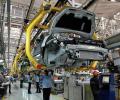
The K-shaped economic recovery in India from the pandemic slowdown shows in corporate results as well. The automobile sector, which represents big-ticket consumption, continues to do well and has increased its share in corporate revenues and profits while fast-moving consumer goods (FMCG) companies that sell low-ticket consumer goods are struggling with poor sales and earnings growth. The share of the automobile sector, including makers of auto ancillaries, in corporate net sales rose to a 10-quarter high of 10.05 per cent during July-September 2023 (Q2FY24) from 8.94 per cent a year earlier and 9.75 per cent in Q1FY24.
